

Building a pool in Woodstock
Woodstock sits inland at the head of the Thames watershed in Oxford County, ringed by farmland and factory-era streets. The housing stock tells the pool story: generous Victorian and postwar lots near the core with room for a full-sized pool, and steady infill and subdivision growth at the edges. Being inland matters — no lake to moderate spring, so ground that's frozen hard in April can turn mucky by May, and timing the dig between the two is a real skill.
Permits and bylaw rules
The City's [building applications and permits page](https://www.cityofwoodstock.ca/your-government/applications-licences-and-permits/building-applications-and-permits) governs the process. Woodstock's building department runs a one-permit system, and a pool triggers a Swimming Pool Fence Enclosure Permit — the City's own "[When is a permit required?](https://media-003-ca.cdn.govstack.com/cityofwoodstock-ca/media/bxjby3x2/when-a-permit-is-required-engineering-2026.pdf)" guide makes two points every buyer should catch:
- Fences enclosing private pools must conform to the City's Swimming Pool Fence by-law, and even if a compliant fence already exists, installing a pool pad still requires the enclosure permit.
- The application needs a site plan; if a fence exists, its material, construction and height must be noted on that plan.
The City publishes a pool fence requirement package with the enclosure specifications, and pools must conform to the Woodstock zoning by-law for setbacks — get the setback answer for your lot before you shop shapes.
Lots, soil and ground conditions
Woodstock sits on the heavy clay till of the Oxford plain. Clay is workable but demanding: it's sticky when wet and concrete-hard when dry, so excavation windows matter, over-dig around the shell is typically backfilled with clear stone, and vinyl-liner pools need a hydrostatic relief valve so spring groundwater can't pop an empty shell. Clay also swells and shrinks with moisture, which makes final grading and yard drainage after backfill part of the job, not an afterthought. Lots near the creeks and the mill-pond lowlands can carry a higher water table — ask, don't assume.
The season
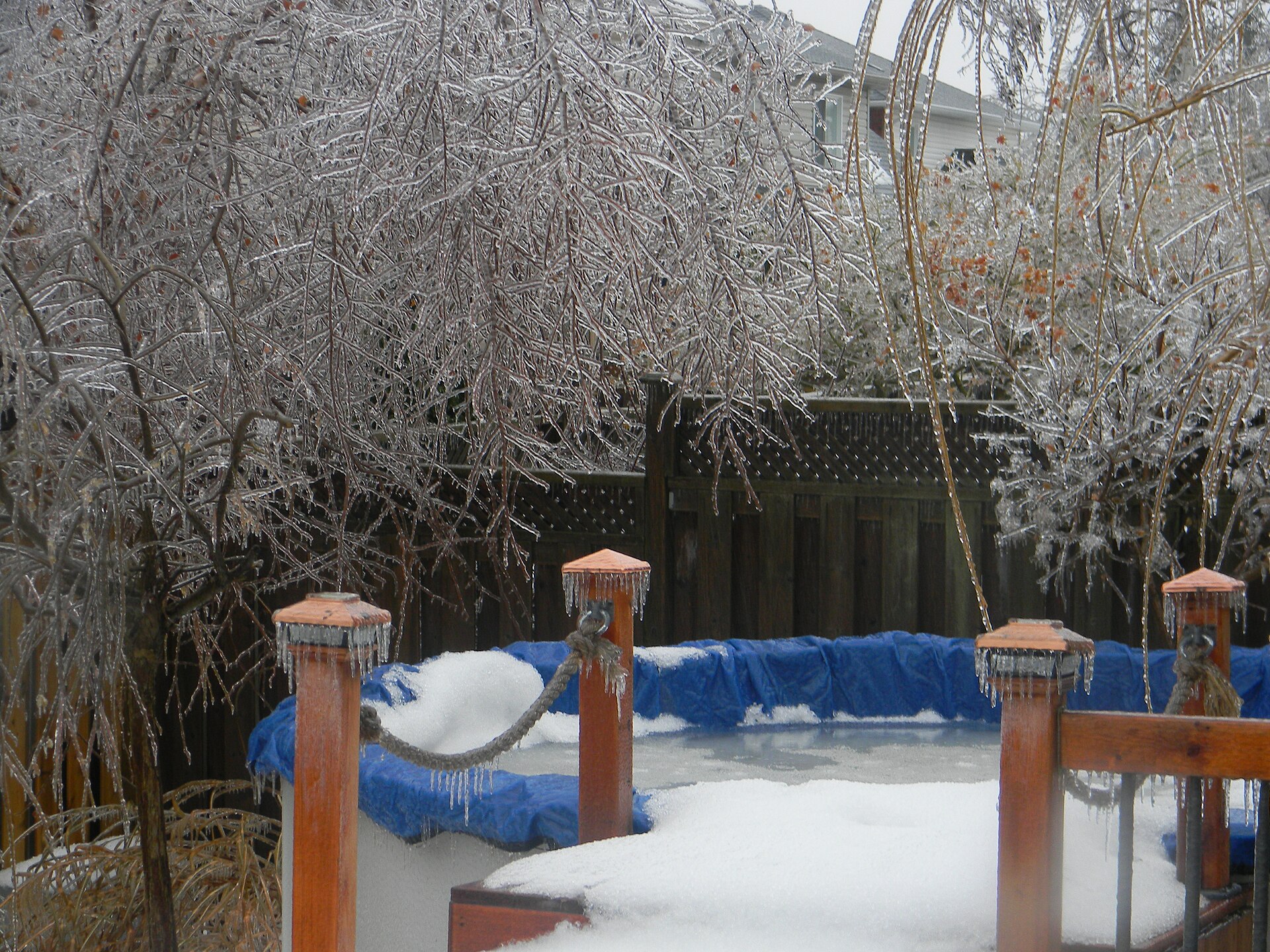
The digging season runs May through September, with most pools completed between June and September and the swim season from late June to Labour Day. Every pool closes before freeze-up: water lowered, lines blown out, equipment winterized, cover fastened against snow.
What drives the price and what to ask
Quotes in Woodstock swing on clay spoils disposal and stone backfill, hydrostatic protection, dewatering in wet springs, access into fenced older yards, gas and electrical runs to the equipment pad, and the fence and gate work the permit requires. The city's position on the Highway 401 corridor between Kitchener and London keeps travel pricing sane — but confirm it in writing.
Ask each pool builder:
- Who pulls the pool fence enclosure permit, and does your site plan package include the zoning check for setbacks?
- What backfill do you use in clay, and does the quoted price include a hydrostatic relief valve?
- How do you charge if we hit groundwater or wet clay mid-dig?
- What is your spring timeline, and what happens if weather pushes the dig?
- What does the written warranty cover — shell, plumbing, liner, workmanship — and for how long?
- Who restores the grading and the yard after backfill settles, and for how long is that covered?