



Building a pool in Collingwood
Located on the southern shores of Georgian Bay at the foot of the Blue Mountains, Collingwood is a four-season destination with a distinct blend of historic downtown brick homes, sprawling recreational chalet properties, master-planned golf and waterfront communities, and newer family subdivisions. Installing an inground pool in Collingwood requires navigating a unique municipal approval path—specifically obtaining an initial Zoning Certificate before filing a permit—as well as contending with Georgian Bay's high water table, rocky terrain, and a colder microclimate characterized by heavy snowbelt winters.
Permits and bylaw rules
The Town of Collingwood regulates swimming pool construction through its [Swimming Pool Enclosures page](https://www.collingwood.ca/building-business/building-services/swimming-pool-enclosure-permits), [Pool Enclosure Requirements guide](https://www.collingwood.ca/media/file/b420-poolenclosurerequirements20190510), and [Town By-law No. 91-42](https://www.collingwood.ca/media/file/b420-poolenclosurerequirements20190510) (coordinated with Fence By-law 2013-046). Key legal requirements include:
- Mandatory Zoning Certificate: Prior to submitting a pool enclosure permit application, homeowners or builders must first obtain an approved Zoning Certificate from Planning Services to verify compliance with lot setbacks, easements, and lot coverage. All permit submissions and payments are handled digitally via the Town's online CityView Public Portal.
- A pool enclosure permit is required before installing any outdoor swimming pool or replacing an existing enclosure. The application requires an owner authorization form, Schedule 1 designer form, and a detailed site plan showing property lines, proposed pool location, fence alignment, setbacks, and distances to private septic systems (if applicable).
- Enclosure height: The fence must extend from finished grade to a minimum height of 1.2 metres (48 inches) measured from ground level on the outside of the enclosure. Where an exterior raised deck or structure sits outside the enclosure, the fence must maintain a height of at least 1.5 metres (60 inches) from that deck.
- Clearance and setbacks: The enclosure must be located not less than 1.5 metres (5 feet) from the swimming pool to which it applies. The maximum ground clearance between the bottom of the fence and finished grade is 50 mm (2 inches).
- Anti-climb rules: Raised ground, sun decks, or other structures on the owner's or adjoining property cannot sit within 1.5 metres (5 feet) of the fence unless the enclosure is extended laterally or at a departing angle at least 1.0 metre beyond the raised feature. The exterior face of the enclosure must have no horizontal or diagonal rails, bracing, or attachments that could facilitate climbing.
- Fence specifications:
- Gates must match the enclosure in height and construction, rest on substantial hinges, and feature a self-closing mechanism and a self-latching device mounted near the top and inside of the gate, alongside a lock kept locked when unattended.
- Temporary safety fencing is mandatory during all phases of excavation and construction. Water cannot be introduced until the permanent enclosure is inspected and approved.
- Properties bordering Georgian Bay, the Pretty River, Silver Creek, Black Ash Creek, or designated wetlands require approval and permits from the [Nottawasaga Valley Conservation Authority (NVCA)](https://www.nvca.on.ca).
Lots, soil and the season
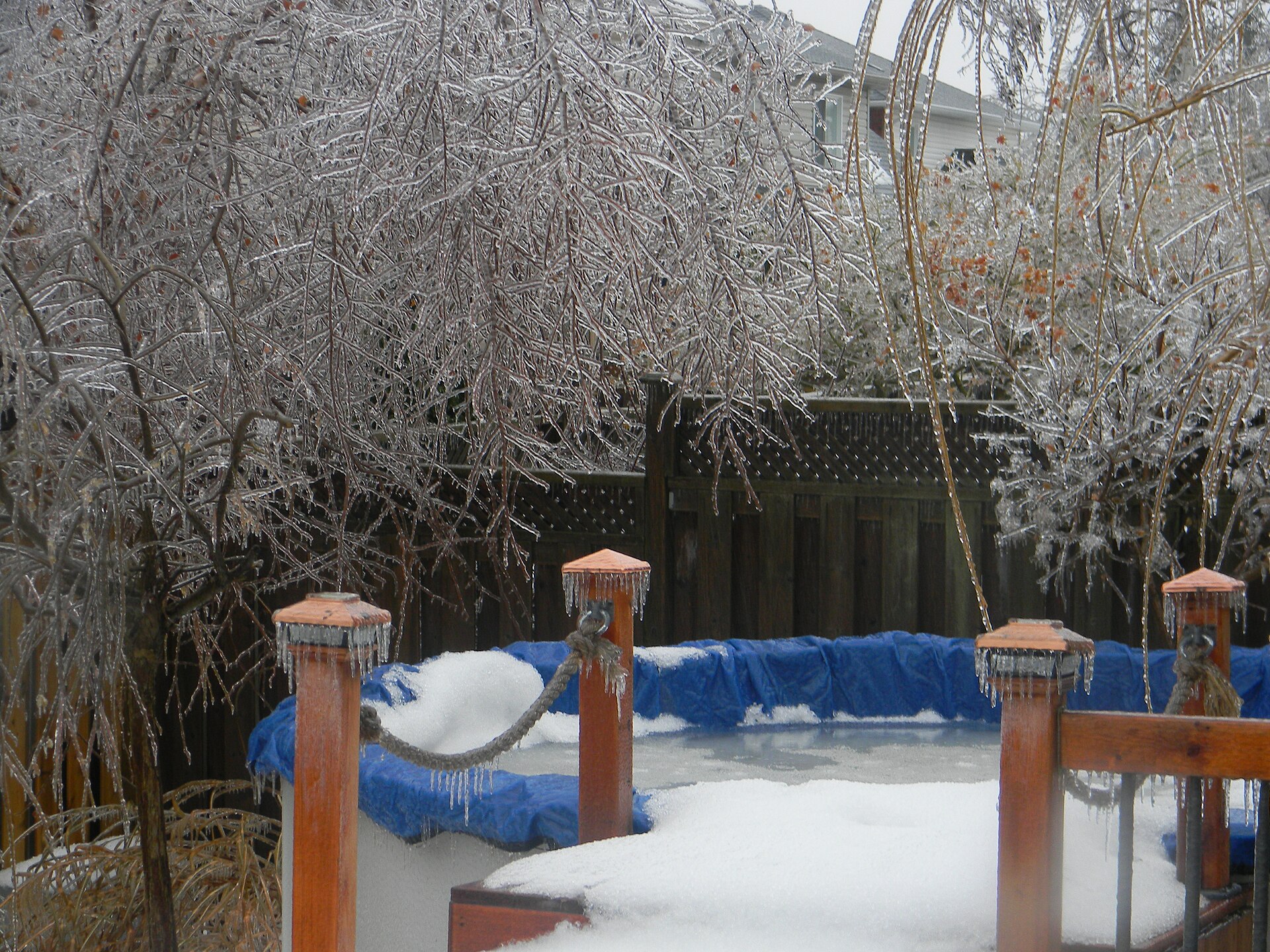
Collingwood's ground conditions reflect its position beside Georgian Bay and the Niagara Escarpment. Shoreline neighbourhoods often encounter high groundwater levels, sandy gravels, and shoreline cobble, requiring continuous dewatering, trench shoring, and stone bedding to prevent pool flotation or shifting. Further inland near the mountain base, excavations encounter dense clay till and fractured limestone bedrock, which frequently requires hydraulic rock-breaking. Collingwood experiences true Georgian Bay snowbelt winters, with heavy snowpack, sustained sub-zero temperatures, and deep frost penetration. Consequently, the outdoor swimming season is relatively short—spanning from late June through Labour Day—making high-efficiency natural gas heaters or cold-climate heat pumps common choices, and making rigorous autumn blowouts, anti-freeze line protection, and heavy-duty winter safety covers essential.
What drives the price and what to ask
Key factors influencing the cost of building an inground pool in Collingwood include:
- Town approval process: The mandatory preliminary Zoning Certificate application from Planning Services followed by the online CityView pool enclosure permit.
- Subsurface and groundwater challenges: Dewatering systems for high water tables near the bay and rock-breaking for limestone bedrock near the escarpment.
- Strict enclosure parameters: Strict 1.5-metre setbacks between the fence and the pool, 1.5-metre clearance from any exterior raised structures, and required self-latching hardware.
- Conservation and environmental permitting: NVCA hazard land or wetland permits for lots near the bay or local creeks.
- Winterization and heating infrastructure: Upgraded pool heaters, automation systems, and custom safety covers engineered to withstand intense snow loads.
Questions to ask prospective pool contractors:
- Will you handle the mandatory preliminary Zoning Certificate with Collingwood Planning Services as well as the CityView pool enclosure permit?
- How does your site plan incorporate Collingwood's [By-law 91-42](https://www.collingwood.ca/media/file/b420-poolenclosurerequirements20190510) requirement for a 1.5-metre setback between the pool edge and the fence?
- How do you address high water tables or cobbly soil near Georgian Bay, and is continuous site dewatering included in the base quote?
- What happens if excavation hits limestone bedrock—is rock hammering charged as an allowance or an hourly extra?
- If my property is regulated by the Nottawasaga Valley Conservation Authority (NVCA), do you coordinate the permit?
- Who installs, inspects, and maintains the required temporary safety fencing during the build?
- Who files the Electrical Safety Authority (ESA) application for equipment wiring and bonding?
- What written warranties cover the shell, pool plumbing, and equipment against severe freeze-thaw cycles?